Pages

Showing posts with label New Zealand. Show all posts

Wednesday, December 25, 2013

Not-as-good-as-last-year’s Christmas pudding


(From Johanna Knox)

Makes two good-sized puddings – one for your family, and one to give away.


This pudding recipe has travelled down at least five generations. My great-great grandmother made it; perhaps it goes back further.

Each generation adapted it or added to it. BUT the vital secret ingredient for 70 years or more has been that you must, at some point, say, ‘I’m sure it isn’t as good as last year’s.’

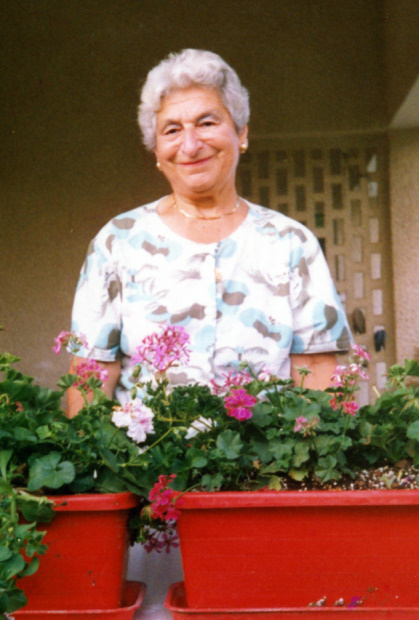
How this tradition came to be, no one now knows, though I wonder if it began with my grandmother (left), who was of a very anxious disposition.

Family members are divided over whether you say it when tasting the batter, or as you’re serving it cooked. But whichever way, it’s imperative.


Ingredients:

1 pound butter

¾ pound sugar

1 ¼ pounds flour

1 ½ teaspoons baking soda

¼ pound slivered or chopped almonds

¼ pound peel

1 packet crystallised ginger (chop if big bits)

1 packet raisins

1 ½ pounds dates, chopped

½ pound currants

1 – 1 ½ pounds sultanas

¼ pound ground almonds

8 eggs

1 dessertspoon full of golden syrup

A wine glass of brandy

Vanilla and almond essence to taste

Prepare two large squares of unbleached calico: wash or boil ahead of time to get any filler out, and dry.


Method:

Cut up butter into small pieces and use fingers to rub in sugar, flour and baking soda.

Mix together well: almonds, peel, crystallised ginger, raisins, dates, currants, sultanas, and ground almonds. Stir these into the rubbed butter mix.

In a separate bowl, mix eggs, golden syrup, brandy, vanilla essence and almond essence.

Pour liquid ingredients into dry ingredients and mix well,

Flour the calicao squares very well, rubbing flour into and in between the fibres.

Dump half the pudding mix into the middle of one cloth, and tie it up in a bundle – with string or a strip of cloth, leaving a little space for expansion at the top.  The string should be tied very tightly. Make a loop for removing the pudding later.

Do the same with the other half of the pudding mix – into the second square of calico.

Fill a stockpot half full of water, with an old plate in the bottom of the pot to prevent burning.

Bring to the boil. Put in one pudding.

Boil for 6 hours, topping up the water when necessary and keeping it on a gentle boil all the time. (The pudding will float so you won’t ever get the water completely covering it.)

After 6 hours, remove pudding from still-boiling water and hang it.

Repeat with the second pudding, or if you have two stockpots, do them at the same time.

Hang puddings for a week or more.


To serve:

On the day of serving, retie the pudding as it will have shrunk, and don’t leave any expansion space at the top – retie it close to the pudding.

Reboil for an hour or more.

Take it out of the calico and put it on a plate. Pour warmed brandy over (about a quarter to half a cup) and set alight before bringing to table.

Serve with brandy sauce and whipped cream.

There will be a white crust on the outside, which traditionally most of the family likes when hot, but if leftovers are served later cold, they remove the crust.


When cold it’s nice with golden syrup.

Sunday, April 1, 2012

Small acts of thrift

(From Johanna Knox)

My Canadian great-grandmother used to say, ‘Look after the cents, and the dollars take care of themselves.' It was an expression of her thrifty approach to life which is still repeated in my family today ... the saying that is, not necessarily, I'm sorry to say, the approach itself!

Even the smallest acts of thrift were important to my great-grandmother. I imagine they were to many women of her time. Some of these small acts were passed down, and became family habits. 

Like the butter wrappers that my great-grandmother, then my grandmother and my mother saved, so that no part of that gold was wasted. Neatly folded in the top compartment of the fridge door, a wrapper could always be brought out when a pie dish or baking tray needed greasing. Did most of us have mothers or grandmothers who did this? 

In my grandmother’s old Mennonite Community Cookbook (by Mary Emma Showalter), there is a ‘Household Hints’ section containing this tip:

‘Before discarding the empty catsup bottle, pour some vinegar into the bottle and use in making French dressing.’

What a neat trick for any sauce bottle when it gets to that frustrating stage where you can see all that perfectly good stuff at the bottom but no matter how much you tip or shake or bang - it WON’T. COME. OUT.

Another family thrift tradition: When my mother made schnitzel or crumbed fish, after all the pieces were egged and crumbed she tipped the few leftover breadcrumbs into the blob of leftover egg, and fried the mix as a ‘crumb pancake’. There was only ever enough for one tiny pancake, but in spite of its meagre size – or more likely because of it – it was my favourite part of the meal.

(Years later, I seized on the way my own son loved crumb pancakes and began to make them deliberately for him, by the bowlful. We got bored of them and went off them, and I learned that some traditions should not be tampered with!)

What small acts of thrift have been passed down and become habits in your family?


Sunday, November 27, 2011

Whisky Log

(from Emma Levy)

This dessert is another Danielle Levy masterpiece, and I actually don't have words for how divine it is.  Now that I think about it, it's possible I was underage when I was eating it.  What I remember best about it (it's been a long time in between tastings) is that I would get a cake fork and take just a minute amount, because it was SO rich - and this is when I was young, when really nothing is too rich, so who knows what trying it in one's mid-forties would be like!!  It was one of the dinner party regulars - how I miss the dinner party days.  My parents threw a lot of dinner parties and I would sit at the top of the stairs in my pjs, instead of being asleep in bed, listening to the chatter and the laughter, wishing I could go down there and be with them....  This is not a recipe you'll use as an everyday one, but give it a go as a special treat.  You won't regret it!

Ingredients
1 packet Wine Biscuits (plain sweet biscuit)
120 g Butter (softened)
1 Egg
1 cup Icing Sugar
½ cup Whisky

Icing
180 g Icing Sugar
1 Tbsp Cocoa
120 g Butter (softened)
1 tsp Coffee


Directions
1.    Cream butter and icing sugar.
2.    Add egg, crushed biscuits, and whisky.
3.    Mix well.
4.    Put in fridge for 1 hour to firm a little.
5.    Shape into a log on grease-proof paper and roll it in the paper.
6.    Chill the log in the fridge for 4-6 hours.
7.    Mix icing ingredients.
8.    Once log is firm, unwrap from paper and ice with icing. 

This log is best served chilled.

A photo of my mum, not sure at what age, but when I first saw 
it I thought it was me - now that was a weird experience!!

Sunday, October 16, 2011

Sunday Morning Eggs with Dad

(from Emma Levy)

There are many women being remembered on this blog, including many by me.  But the first significant person in my life who died, and who cooked for me, was my dad, Phil Levy.  He died a long time ago – in 1987.  I was only 19.  He was one of the kindest men you could ever meet, and terribly trusting.  Once I told him I was collecting signatures and asked him to sign a blank piece of paper right down the bottom.  He did it. Above it I wrote “Emma cannot participate in PE class today” in my best Dad handwriting, and felt so guilty for duping him that I tore it up and did PE.

I really wanted to give Dad a spot in the blog, but the only things I could remember him making were whiskeys at the end of each work day, and barbeques, in the great NZ tradition of the 80s where men suddenly became the cooks in that single circumstance of the backyard barbie. 

Then I remembered Sunday mornings before going to Hebrew School.  Every week he made us poached eggs on toast.  Much effort went into them.  He told me it was crucial that you boil the water, but only put the in egg when you've removed the pot from the heat, and that you must put vinegar into the water.  That’s a recipe, isn’t it?  

The other thing that happened every week, without fail, was that he would break a yolk. Much swearing accompanied each breakage - one of the few times this mild-mannered man broke out into a litany of language no child should hear. It was so inevitable that I sat at the breakfast table each Sunday morning, tensing myself, waiting for the break and the swearing that ensued. I sat quietly, wanting to yell out “why don’t you break it into a bloody teacup first so at least if it breaks it’s not in the bloody water"?? But I'd have got told off for swearing.
 
So here ‘tis – a tribute to a beautiful man who was lost to us far too young, and who put more effort into his kids’ Sunday eggs than anyone I know.


Poached eggs on toast for your kids on a Sunday morning
1.     Boil water.
2.     Take it off the element.
3.     Pop bread in the toaster.
4.     Put a dash of vinegar in the water. 
5.     Break an egg into the water. 
6.     Break the yolk. 
7.     Swear for up to a minute. 
8.     Start again. 
9.     Put toast onto the plate and butter if desired. 
10.   When the egg white has just turned white and solid, get a slotted spoon and take out the egg,  
        hoping it doesn’t splosh through the slots or plop over the side back into the water, probably 
        breaking, in which case add more swearing here. 
11.   Spoon the egg onto the toast.  
12.   Hand dish to your child who is both relieved the weekly routine is over, prepared to eat the 
        egg in whatever state it’s in, and is quietly filing away the language they’ve just learned.


Thursday, October 13, 2011

Freda Beder’s Fabulous Fruit Cake

(from Ruth Ketko)

“I always wanted to stay at home and bake cheesecakes”!  So said Mum, but life’s journey took her on different paths. 

My Dad died in 1946, just seven years after they were married, and Mum went from being a “balaboosta” (a Yiddish term meaning the perfect housewife, homemaker, wonderful mother, cook, and gracious hostess) to becoming a successful business woman, opening her own “Finchley Wool Stores”. Her life took her from England to New Zealand, to Israel, then back to New Zealand. A much-loved person, always making sure to have plenty of “nosh” and loads of “wisdom” to dish out.

I don’t remember Mum making many cheesecakes, but she became well-known for her delicious fruit cake. Made for birthdays, bar or bat mitzvahs, weddings, and many other special occasions, as well as making sure to keep one for home, for years she used to make three at a time!

One of my very special memories of this successful fruit cake was when, on one of her last birthdays, at a time when Mum was unable to continue to make fruit cakes, our son and daughter-in-law, Paul and Sue, surprised her with a birthday cake that they had made using her “never-fail” recipe!  We were so proud of them, and the pleasure on Mum’s face said it all!

Here it is – enjoy!

1  lb. mixed fruit                                         1 lb. sultanas
½ lb. butter                                                 ½ lb. sugar
12 oz. flour                                                 1 tbs. Golden Syrup
4 eggs                                                          ½ tap. Baking Soda
¼ cup milk                                                 Nuts as desired

Melt butter and mix with sugar. 
Add 1 egg at a time. 
Mix. 
Add golden syrup, then flour, then fruit and nuts. 
Lastly bring the milk and baking soda to boiling point, then stir it in. 
Bake in a 9" round tin greased and lined with greaseproof paper of 3 thicknesses, and 1" above the tin. 
Place nuts on top. 
Bake in moderate oven 3000 for 3 hours. 
When removed from oven, add brandy.


Tuesday, October 11, 2011

Chicken Veronique

(from Richard Bright)
Mum was a good cook, though in a very Anglo-centric way. I remember enjoying everything she put in front of us and, despite her menu being very meat-and-three-veg oriented, I never had to endure over-cooked greens or grey meat. But, with only a couple of exceptions, our food was essentially British fare. It wasn’t until I went to university that I discovered curry, tacos, kebabs, or garlic. Or that 6000 years of Chinese culture had produced anything other than sweet and sour pork. 
Thus the meals in Mum’s repertoire that hinted at a world beyond the English Channel (and bear in mind that I grew up in New Zealand) were truly highlights that remain memorable to this day.
One of those highlights, and it seems so quaint today, was Chicken Veronique. It was chicken. With fruit! It was like some mad alchemy and I was always excited when the standard after-school question - “Mum, what’s for dinner tonight?” - elicited the chook-and-grape answer.
This exotic dish came from the magnificent 72-part magazine series ‘The Cordon Bleu Cookery Course’. This prized collection, complete with blue binders was acquired by my parents in the late sixties and it is still in the possession of my Dad today. It seemed very daring and authoritative, and I spent many hours poring over its step-by-step photos and lists of fabulous ingredients. And without it I would have probably made it to university without having tasted spaghetti bolognese or beef stroganoff!
So, here's how to make Chicken Veronique, with precise instructions from the Cordon Bleu Cookery School, c1968.
1 chicken
2 knobs of butter
3-4 sprigs of tarragon
1/2 pint of chicken stock
1/2 teaspoon arrowroot
2 tablespoons double cream
1/2 cup white or muscat grapes, peeled and pipped
  1. Season the inside of a trussed chicken.
  2. Rub the chicken with butter, and put 3-4 sprigs of tarragon inside, along with a further knob of butter.
  3. Place the chicken in a roasting tin, with 1/4 pint of chicken stock, cover with buttered paper, and roast for an hour at 400 F.
  4. After the first 15 to 20 minutes, the chicken should be removed from the oven and basted; and then basted again after another 15-20 minutes, turning the chicken around, each time.  The buttered paper should be removed a few minutes before the end of the cooking, to brown the bird. 
  5. The hot chicken is then removed to a wooden board, jointed and carved.
  6. The remaining juices in the roasting tin are reduced over a steady heat until brown and sticky.  Add ¼ of a pint of chicken stock to the pan to make a gravy.
  7. Strain the gravy into a small saucepan and thicken with ½ teaspoon of arrowroot mixed with a little water. Add the arrowroot mixture away from the heat, and then stir until boiling.
  8. Stir two tablespoons of double cream into the gravy.
  9. Add the grapes to the gravy.
Audrey Bright aged 16

Thursday, October 6, 2011

Aunty Nina's Party Leftover Rolls

(from Johanna Knox)

My Aunt Nina loved parties and festive food. At her burial we ceremonially threw liqueur chocolates onto her coffin - the ones my Mum was going to give her for her birthday in two weeks' time.

In Nina's younger days, she used any excuse to invite a bunch of friends round for a celebration.

Although everyone always brought a plate, she loved to provide plenty of food herself, and spent the day before the event making punch, chocolate eclairs, and more.

I was fascinated one time when, faced with left-over ingredients from making quiche, sausage rolls, and a cheese log, she threw them together and made a whole new plate of savories:

Ingredients
A few frozen peas
A handful of chopped cooked bacon
a couple of spoonfuls of cream cheese
Leftover flaky pastry

To make
Roll the pastry and cut into strips as if you were making sausage rolls.
Smear down the middle of the strips with cream cheese.
Scatter on the bacon and peas.
Roll up like sausage rolls.
Bake.

I periodically had cravings for these for years afterwards!


Tuesday, October 4, 2011

Granny Rosie and the Wonderful Baked Cheesecake

(from Sue Berman)
My granny Rosie used to make a wonderful baked cheese cake. On numerous occasions my mother asked her for the recipe but she would never give it up, always preferring to just ‘make it’, it never got written down before she passed on.  I can remember the cheese cake (as well as tongue sandwiches, trifle, pickled fish and pickled cucumbers!) even though we left South Africa and Granny Rosie’s baking treats when I was only nine years old.

Many many years later in Wellington, New Zealand, I was lucky enough to be at an occasion which had me at Dani Levy’s lunch table. Dessert included the most superb baked cheese cake – it took me back to the cheesecake my Granny used to make – except that Dani had created a beautiful boysenberry coulis which was poured over the top - divine.

I asked Dani if I could possibly have the recipe and she very kindly typed it up for me adding a hand note on the biscuit quantity.  As per Dani’s note at the bottom I often do ‘play around with the ingredients’.  No matter what combinations of cheeses I use or number of eggs it is always a success and loved by everyone. I really treasure this recipe for all the special connections it has.

Thursday, September 29, 2011

It's Jewish New Year - time for a piece of honey cake (or two!)

(from Nicki Levy)


Rosh Hashanah Honey Cake (Temple Sinai Bulletin)

3 eggs
1 cup sugar
1 cup oil
1 cup honey
3 tablespoons cocoa
2 ½ cup flour
1 teaspoo bicarb of soda
1 Granny Smith apple (opt)
1 cup boiling tea

Grate apple if using (Mum says use it!). Combine all ingredients  in order listed, mixing well. Pour into large, well greased tin. Bake at 160C for 1 ¼-1 ½ hours.


Jewish New Year Honey Cake

When Mum died in 2004 , I asked Adam and Emma if I could take Mum’s recipe books. Mum had (like I do too) collected recipes from magazines, newspapers but, most interestingly, her friends, Carole Charles, Maureen Baruch, Barbara Treister, Sandy Myers (oh, and Alison Holst of course). She always credited them next to the recipe.

There are quite a few recipes in my own child’s hand-writing that Mum must have asked me to write out – or maybe because they were recipes I wanted her to make – anyone that knows me won’t be surprised that on one page I have written out the recipes for Chocolate Fudge and Chocolate Blancmange.

I love to flick through and find recipes she made regularly, like Chocolate Crunch, which I think Emma and I had as our nutritional afternoon tea when we got home from school most days. I try not to think about the half pound of butter that went into it!

But the best thing about the recipe book is at the back where in the early 1970s she listed menus for her dinner parties and who attended. On 15 May 1971 (when she had three children under the age of five) she lists: Entrée - pancakes filled with smoked salmon & cheese/mushrooms & cheese. Main - Argentinian Steak, Mushrooms a la Greque, Tossed Salad, Cauliflower Gratin, Baked Potatoes. Dessert - Cheesecake with Boysenberry Topping. Those that were lucky enough to enjoy this feast were the Baruchs, the Hyams, the Brickmans and the Myers.

The honey cake recipe is probably not the one we grew up with as it came from the Temple Sinai bulletin. Mum only joined the Temple after Dad died, probably in the 90s. I accidentally left out the cup of tea when I made this yesterday and I’ve never had so many compliments on the cake. Try it with and without! Bon appetit and Shana Tova!

Wednesday, September 28, 2011

Grandma's Tan Fingers

(from Emma Levy)


Base:
170g butter
285g flour
290g sugar
½ tsp vanilla

Cream butter and sugar.
Add vanilla, then flour.
Roub 2/3 of the mixture in buttered sponge roll tin and cool in the fridge.

Filling:
55g butter
1 Tbsp golden syrup
½ tin condensed milk
chopped walnuts

Heat in saucepan and stir until blended.
Cool and spread over shortcake base.
Crumble remaining mixture with the walnuts.
Put in oven at 350F.
Bake until a milky tan colour for about 35 mins.


Backstory

Rita Levy was known throughout Lower Hutt.  Well it wasn’t a big place at the time, and she was in the “rag trade”, running a women’s clothing store on High St for many years.  A working grandmother!  To my brother and sister and I, she was Grandma, and she was a heap of fun.  


Many afternoons we would sit in her lounge room chatting and being fed food we’d NEVER have been allowed at home.  One of ten children from south London, she held on fast and tight to her English accent and the proper English ways.  She disapproved of much that went on in modern families and modern times, and she loved a good gossip.  She wasn’t much of a cook, and the few things she made, were made repeatedly.  No matter – we loved them!  Her Tan Fingers are the only biscuit or cake I even remember her baking.  I could gobble up many Tan Fingers in one afternoon.  


Grandma died in 1987, one month after her only child, my father, passed away.  Life without him was just too hard for her.  For years we talked about the Tan Fingers, and I often looked for them in old-style cafes, hoping to find them nestled in between lamingtons and vanilla slices.  They never were.  Then one day, early in 2011, I opened one of her old cookbooks that I have opened many times before, and saw a slip of paper between two leaves of the book.  Taking it out, I screeched as I realized that I was holding the beloved Tan Finger recipe.  I dashed to the computer and converted all the ounces to grams, and emailed it to my siblings.  


All three of us made it – it was both joyous, and incredibly sickening to gobble them down all these years later - they are VERY SWEET!!  My 43 year old palate is not my 11 year old palate!  But they are worth a try – they are a yummy, old fashioned biscuit, and the kids will love them!  Thanks Rita.

Tuesday, September 27, 2011

Aunty Nina’s Iced Jaffa Coffee

(from Johanna Knox)


Ingredients
2 or 3 oranges
A plungerful of hot coffee
1 heaped tablespoon of cocoa
1 heaped tablespoon of sugar
¼ cup water
Vanilla ice cream

Instructions
Slice unpeeled oranges into rounds and place in bowl or jug.

Boil cocoa, sugar and water together and mix with the freshly brewed coffee to make a mocha mix.

Pour hot mocha mix over sliced oranges and leave to steep. When cool, place in refrigerator to continue steeping till morning.

Remove orange slices and serve the iced jaffa coffee over scoops of icecream. (You can also eat the mocha-infused orange slices.)

Alter ratios to taste.


Backstory
My aunt Nina had died two days ago. Shaken and restless, I ranged between the two rooms of her bedsit, peering into cupboards, rifling through drawers. I apologised:  ‘I don’t know what I’m looking for, but I’ll know it when I find it …’

I didn’t want to elaborate to my father or sister, who were industriously sorting books, clothes, and crockery. I was embarrassed at the sudden narrowness of my focus, and the terrible childish drive that had taken over: Nina had loved to cook, and I wanted to be the one who found her recipes. 

But what did they look like? Were they handwritten cards? Books? Clippings? I couldn’t remember. When I finally gave up and joined the sorting, I confessed my folly.

The next day, my sister and father, excavating deeper, rang to say they’d hit recipes afterall and, being kind and careful archaeologists, had left them for me in situ.

I was excited, until I saw the small, grubby pile they were talking about. Free recipe cards from the supermarket, clippings cut from Tegel chicken wrappers, yellowed appliance manuals ... Not  a single recipe I remembered Nina using.

‘But didn’t she mostly cook from her head?’ my partner Walter reminded me that evening.

Of course!

Thinking back, I'd rarely seen a written recipe in her hand. Her repertoire consisted of family dishes she’d had down pat for years, party foods her friends had shown her, and numerous of her own inventions and adaptations. Wherever Nina had now gone – somewhere or nowhere – she’d taken her recipe file with her.

So now I search my own memories trying to bring up details of recipes she showed me, or cooked while I watched from her kitchen table. I’ve pieced together five so far, and this is the first I’ve written down.